
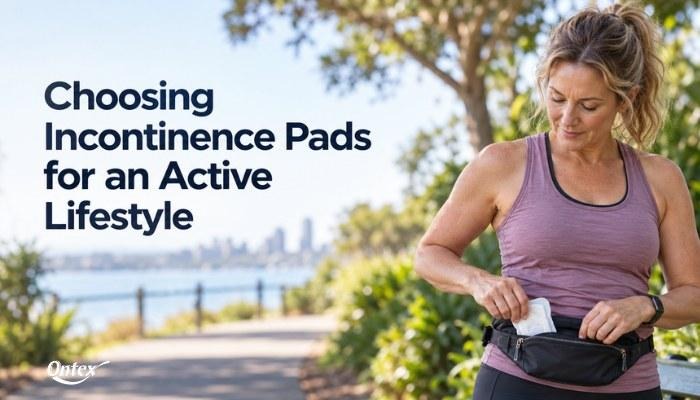
Choosing incontinence pads for an active lifestyle means finding one that stays put through a run, a lift, or a long shift. Bladder leaks can start halfway through a session, and a pad that shifts or soaks through will often end it early.
At Ontex Healthcare, we understand that incontinence needs change with your daily routine, so this guide focuses on pads for training, work, and travel. We’ll first explain why exercise causes leaks and how pelvic floor exercises help, then compare pad features and absorbency levels.
Whenever you’re ready, read on and let’s take one worry off your list before your next workout.
Why Do Workouts Make You Leak Urine?
Exercise puts pressure on your bladder, and the muscles that hold urine back can’t cope. Your bladder sits inside your abdomen, so every heavy lift compresses it. Doctors call urine leakage from that squeeze stress incontinence (so this “stress” means literal physical pressure, not worry).
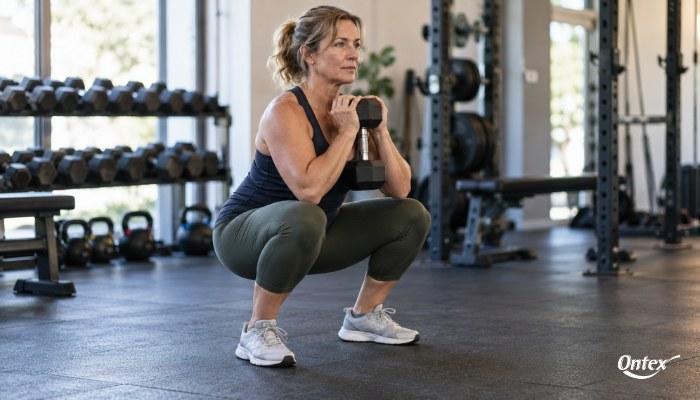
Believe it or not, 7.2 million people aged 15 or older experience some form of incontinence. And for many of them, certain movements create more pressure than others. For instance, running, jumping, squats, and heavy lifting can all cause leaks when your pelvic floor muscles can’t provide enough support during the movement.
Can Pelvic Floor Exercises Help You Stay Active?
Yes, stronger muscles mean fewer leaks when you run, lift, or play. Spending just a few minutes on exercises a day can help prevent incontinence, and it’s never too late to start.
We’ll walk through what your pelvic floor does, how long exercises take to work, and who can teach you.
Your Pelvic Floor: What It Does and Why It Weakens
To start, your pelvic floor is a set of muscles that supports the bladder, bowel, and uterus. It also works alongside your deep core muscles, so both groups help manage the pressure created by heavy lifting.
When the pelvic floor weakens, it provides less support around the bladder and urethra (the tube carrying urine out). This allows urine to leak when pressure rises during exercise, coughing, or lifting.
And the causes don’t stop at ageing. The other reasons include:
- Pregnancy
- Vaginal childbirth
- Obesity
- Constipation strain
- Menopause
- Prostate cancer treatment
The effect differs by cause, too, with some stretching the muscles, some increasing pressure on them, and others changing how well they contract.
Pads Cover Leaks While Your Muscles Rebuild
So will you need pads forever? Not necessarily. Many notice better bladder control within 6 to 8 weeks of practising pelvic floor exercises. Improvements continue over 12 weeks and beyond as the muscles build strength, coordination and endurance.
However, during the early weeks, leaks can still happen when making sudden movements. At that time, a continence pad catches urine and protects your clothing while you continue exercising. Think of it as support while you work on improving bladder control.
Need a Hand With Exercises? Who to Call First in Australia
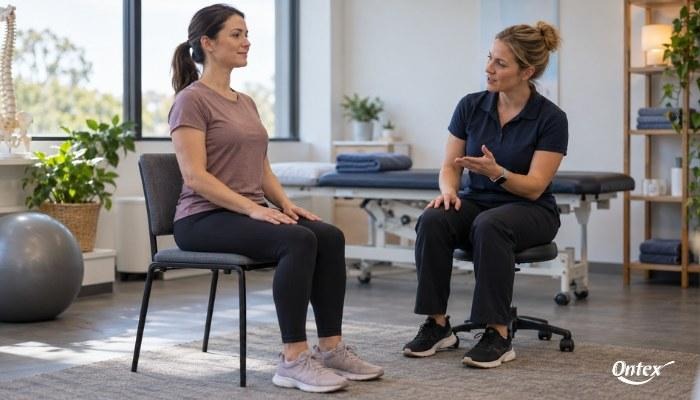
Start with a healthcare professional, such as a GP, continence nurse or pelvic health physiotherapist. We recommend professional help to learn the correct technique and discuss your symptoms.
They need to check the technique because squeezing the wrong muscles or holding your breath reduces the value of the exercise. Some people also have overactive pelvic floor muscles that stay too tense and need relaxation rather than more strengthening. In those cases, repeatedly tightening the muscles may make symptoms worse.
For free, confidential support, you can call the National Continence Helpline on 1800 33 00 66, weekdays 8 am to 8 pm AEST. The service connects you with continence nurse advisers who will point you towards appropriate support.
What Should Incontinence Pads Offer for an Active Lifestyle?
The right pad stays slim, secure, and dry, so you spend less time thinking about leaks while exercising. Fit is just as important as absorbency during movement. If a pad shifts away from where leaks occur, urine will escape around the edges before the absorbent material catches it.
With that in mind, five features affect how well incontinence pads suit an active lifestyle.
- Slim Profile: A discreet, low-bulk pad sits closer to the body and shows less under leggings. This way, less material will rub against your skin during daily wear or distance runs. Ontex’s iD Discreet Light Super is designed with exactly this in mind. It has a thin, flexible shape that sits discreetly under clothing.
- Fit for Your Body: Pads designed for women and men place absorbent material where leaks commonly occur for each body type. A better-positioned absorbent area helps catch urine while the pad stays comfortable during movement.
- Secure Grip: Pick iD Expert Light for its wide adhesive strip. The adhesive holds the pad in position, while close-fitting underwear reduces movement during jumps, sprints, and other exercise.
- Breathable Materials: Heat and moisture build up during a gym class or run. Soft, breathable materials reduce that damp feeling against the skin. Check the pack for skin-friendly materials and a dermatologically tested label, too.
- Odour Control: Exercise adds sweat and heat around the pad, which can make odour more noticeable after a leak. Odour-control technology in iD Discreet Light Normal neutralises unwanted smells during and after a workout.
These features help with fit and comfort, but the pad still needs enough absorbency for your level of leakage. A long run or heavier leak can overwhelm a light pad even when it fits well. You need to match the absorbency to how much you usually leak at one time, so the pad protects you until your next change.
How Much Absorbency Do Your Incontinence Products Need?
Match absorbency to how much you leak at once. Too little absorbency will leak through, while too much will add bulk and cost.
The table pairs each leak amount with a pad type.
| Leak Level | Typical Amount | Pad Type | Example Pad |
| Extra light | About 10ml | Slim light pad or liner in regular underwear | iD Discreet Light Mini, 191ml |
| Light | About 80ml | Light pad in regular underwear | iD Light Normal, 295ml |
| Moderate | About 200ml | Higher absorbency light pad | iD Discreet Light Super, 693ml |
| Heavy | 400ml or more | Large pad worn with net pants | iD Form Plus Size 2, 1,500ml |
In practice, the typical amount refers to how much urine escapes per leak, while the pad figure is the total it holds across hours of wear. So several smaller leaks can gradually fill the pad before you change it.
Sanitary pads, meanwhile, hold less than incontinence pads, which pull urine into a super-absorbent core. This core is designed to handle urine and draw moisture away from the surface, and the pad stays drier against your skin.
Choosing too little absorbency means the pad may fill before you are ready to change it. The good news is, Ontex Healthcare offers up to four free samples (after a few quick questions) to help you pick the right product.
What Helps With Managing Incontinence Away From Home?
A short routine and a small kit keep you a step ahead of an unexpected leak. For example, a long drive to a trailhead can leave you far from the nearest toilet. In that situation, planning before you leave gives you more control over when you stop and change.
Along with planning, good timing lowers the risk of a leak, while the right pad provides protection if urine still escapes. Four habits on outings cover bladder timing, spare supplies, pad changes, and diary notes.
- Mind Your Bladder: Empty your bladder before you leave, since a full one makes leaking more likely. For longer outings, plan bathroom stops along the route. This way you know where your next toilet will be.
- Pack a Spare Kit: Keep spare pads or liners, wipes, a disposal bag, and clean underwear in a discreet pouch. Wipes help clean urine from your skin after a leak, while a disposal bag keeps used pads separate until you find a bin.
- Change When Wet: Leak size varies, so check how the pad feels rather than changing it only at set times. If it regularly soaks through during exercise, high absorbency for heavier leakage will give you more capacity between changes.
- Keep a Leak Diary: Note the time, activity, and leak size (a phone note works fine) to see when leaks usually happen. Write down any drinks you’re having, like citrus and tomatoes, as possible irritants. These notes also give a health professional useful details when discussing your symptoms.
With a routine like this, adults with incontinence are better prepared for longer periods away from home. Staying informed on where the toilets are, carrying a spare pad, and having somewhere to store used products removes some of the uncertainty when you’re not home.
Why Quit Exercising When Help Is Easy to Find?
You don’t need to quit exercising because of bladder leaks. Reliable protection and professional support both exist for incontinence. As covered earlier, pelvic floor exercises and a well-matched pad work as a pair: the exercises support better bladder control over time, while the pad handles leaks during activity.
Don’t worry about the cost of continence products, either. There are many options to manage product costs with government support. Eligible readers can claim up to $739.40 in 2026-27 through the Continence Aids Payment Scheme.
To see more details on the 2026-27 changes, browse Ontex Healthcare’s government funding articles. Our full range of products also covers pants, slips, bed protection, and skin care. These products support different needs, including heavier leaks, overnight protection, and skin exposed to urine.
