
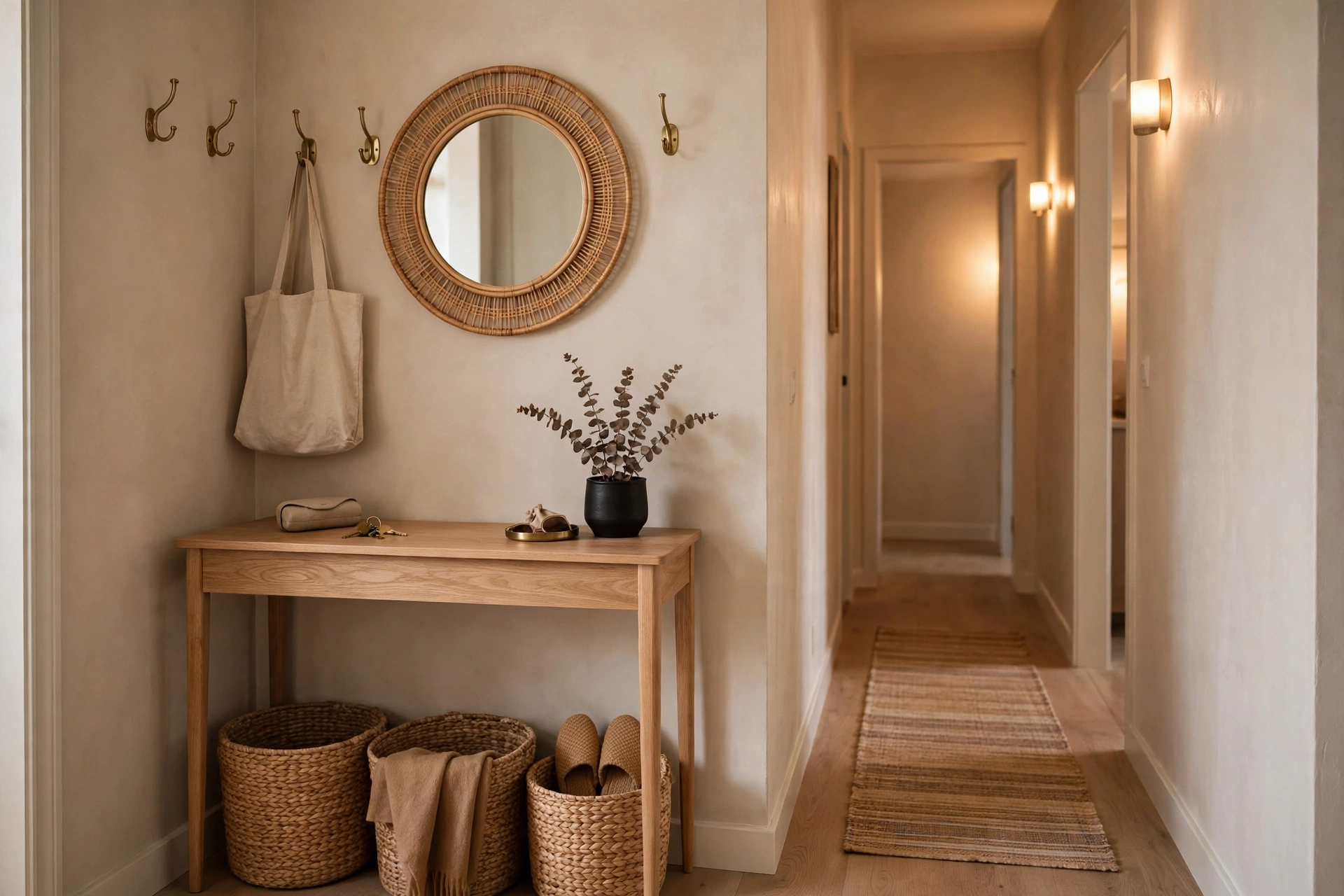
Your entryway is the hardest-working few square feet in your home — the first thing guests notice and the dumping ground for shoes, keys, mail, and bags every day. These small entryway decor ideas are built for that reality: every inch has to look intentional and stay functional. You do not need square footage for a stylish first impression. You need a plan — one slim landing surface, storage that climbs the walls, a mirror, a defined floor zone, and warm light. This guide walks through each decision with realistic costs, renter-friendly options, and the mistakes that make small entries feel even smaller.
The Short Answer: What Actually Works in a Small Entryway
A great small entryway does three jobs at once. It catches what you carry in (keys, mail, sunglasses), stores what you grab on the way out (shoes, coat, bag), and sets the tone for the rest of the home. Anything that serves none of those jobs is clutter, no matter how pretty. Before buying anything, find which job your entryway fails at — most fail at storage first. Fix that with vertical solutions and slim furniture, then add one or two decorative layers: a mirror, a rug, and a warm light source. That combination alone transforms most cramped foyers and narrow hallways.
Start With Measurements, Not Shopping
The most common reason small entryway projects fail is furniture bought on hope. Measure first and the rest gets easy.
- Clear walkway: keep at least 36 inches (about 91 cm) of unobstructed passage.
- Door swings: note the arc of the front door and any closet doors — furniture inside a swing arc gets hit daily.
- Wall length: measure the usable wall run and mark furniture footprints on the floor with painter’s tape before you buy.
- Outlets and switches: mark them on your sketch so lamps and chargers have a home without cords crossing the walkway.
- Photograph the space in daylight and at night to spot dark corners and glare problems.
This ten-minute exercise prevents the classic mistake: a beautiful console table that leaves a 24-inch choke point you resent every morning.
Define the Zone With a Rug or Runner
In open-plan homes the entryway often has no walls, so a rug does the architectural work — it carves an “entry” out of the living room, protects the floor, and adds the first layer of color guests see.
- Runner for hallways: a 2.5 to 3-foot-wide runner laid from the door into the hall creates a natural path and can visually lengthen a narrow space.
- Area rug for square entries: leave 4 to 6 inches of bare floor around the rug so it reads as a defined zone.
- Material matters: choose low-pile, washable rugs or indoor-outdoor weaves for heavy foot traffic.
- Keep patterns calm: avoid very busy prints in tight spaces; a simple border or subtle stripe adds interest without visual noise.
- Safety first: always use a non-slip rug pad — rugs that bunch or slide are a trip hazard.
Go Vertical: Let the Walls Do the Heavy Lifting
Floor space is scarcest in a small entryway, so the smartest storage climbs the wall — keeping shoes, coats, and bags off the floor while doubling as decoration.
Hooks and Peg Rails
A row of wall hooks is the single highest-impact upgrade for entries with no closet. Mount a peg rail or hooks at about 60 inches high for adults, with a lower row around 40 inches if kids use the entry. Check weight ratings — many adhesive hooks hold only 3 to 5 pounds, fine for keys but not a heavy winter coat. For heavier loads, screw into a stud or use proper drywall anchors.
Floating Shelves as Mini Consoles
A single floating shelf, 8 to 10 inches deep at console height (30 to 32 inches), gives you a landing surface for keys and mail with zero floor footprint. Paired with a mirror above, it reads as intentional furniture while leaving the floor clear. In very narrow halls this beats a console table outright, because nothing projects into the walkway.
Choose Slim Furniture That Earns Its Floor Space
If you have room for one piece of furniture, make it work hard. Look for pieces under 12 inches deep and favor open, leggy designs that keep sight lines clear.
- Slim console table: the classic entry piece — choose one with drawers or a lower shelf for extra storage.
- Storage bench: seating plus hidden storage for shoes and bags; the best multitasker when you have the depth.
- Tilt-out shoe cabinet: stores many pairs in about 10 inches of depth and hides clutter behind clean doors.
- Narrow ladder shelf: holds baskets and decor up high while occupying barely a foot of floor.
Compare your options honestly before committing:
Mirrors and Lighting: The Space Multipliers
No two additions change a small entryway more than a mirror and better light. A mirror roughly doubles the perceived depth of a narrow space and bounces light deeper into the room. Hang it opposite or adjacent to a light source — never facing a blank wall. Size it generously: about two-thirds the width of the console or shelf below looks deliberate, while a tiny mirror looks like an afterthought. If you cannot drill, a full-length mirror leaned securely against the wall works just as well.
Most entries suffer from a single harsh overhead light. Add one warm secondary source — a small table lamp, a plug-in wall sconce, or a battery-powered picture light over artwork — in the 2700–3000K range. Layered, warm light is what makes guests feel the space was designed rather than merely lit.
Walls With Personality: Color, Wallpaper, and Art
The entryway is the safest room for a bold design move — a little paint or pattern goes a long way and costs very little. A deep accent wall (navy, forest green, warm terracotta) can make a compact entry feel jewel-box-like, provided the lighting is warm and adequate. Prefer airy? Light neutrals — warm whites, soft grays, pale sage — bounce light around.
Peel-and-stick wallpaper is the renter’s secret weapon: bold pattern on one wall, zero damage on move-out. For art, hang the center at about 57 inches from the floor — average eye level — which makes even inexpensive prints look gallery-hung. One large statement piece usually beats a fussy cluster in tight quarters.
Build a Drop-Zone System for Daily Essentials
Decor gets the compliments, but systems keep the entryway looking decorated. Designate one home for each daily item: a shallow tray for keys, a slim wall sorter for mail, a hook for your everyday bag. Then adopt the five-minute reset: every evening, return each item to its home.
Add Life: Plants and Soft Textures
A single plant does more for perceived warmth than almost any object you can buy. In low light, a pothos or snake plant tolerates neglect; with no natural light at all, a good faux plant gives the same softness with zero care. Add one textile — a throw pillow on the bench — for the softness hard floors lack. One plant and one textile is plenty; restraint is the whole aesthetic in a small space.
7 Mistakes That Make Small Entryways Feel Smaller
- Furniture deeper than 12 inches in a narrow hall — it eats the walkway.
- No defined floor zone — without a rug, the entry bleeds into the next room and reads as leftover space.
- Dark colors with no light plan — deep walls need warm, layered lighting or they close the space in.
- Too many tiny objects — ten small trinkets read as clutter; one medium plant or bowl reads as design.
- Ignoring the back of the door — an over-the-door organizer adds storage with zero footprint.
- One harsh overhead light — always add a warm secondary source.
- No designated shoe spot — shoes multiply on the floor within days.
What It Costs: A Realistic Budget Breakdown
Entryway makeovers are among the cheapest room refreshes because the space is tiny and most pieces are small. All figures below are rough estimates for basic versions at major retailers — actual prices vary by store and region.
You do not need everything on the list. A strong starter set — hooks, a key tray, a shoe rack, and a mirror — typically lands around $40–$65 total and covers the four things most entryways need most. On a truly tight budget, start with just hooks and a tray for under $25; that alone captures most of the daily benefit.
Renter-Friendly Entryway Ideas
Nearly every idea in this guide works in a rental. Lean a full-length mirror instead of hanging it, use adhesive hooks rated for the weight, choose peel-and-stick wallpaper, lay a rug with a non-slip pad, and pick freestanding pieces — a coat stand, a narrow bench, a plug-in sconce — that move with you. Skip only hardwired lighting and drilling into tile or masonry without permission.
Safety Notes and When to Call a Professional
Anchor tall or top-heavy furniture — shoe cabinets, ladder shelves, leaning mirrors — to a wall stud with anti-tip hardware. Keep the full 36-inch egress path clear of furniture, rug edges, and shoe piles. Use non-slip pads under every rug. For electrical work, call a licensed electrician for hardwired sconces or new fixtures — plug-in and battery options cover nearly every entryway need. For heavy items on old plaster-and-lath walls, a handyman with the right anchors is a worthwhile one-hour hire.
Final Thoughts
A stylish small entryway is not about square footage — it is about decisions. Measure the space, define the zone with a rug, move storage onto the walls, choose one slim piece of furniture that earns its footprint, and finish with a mirror and warm light. Your next step: this weekend, tape out your furniture footprint, order the hooks and tray, and install them in a single afternoon. The entryway you stop noticing — because everything has a home — is the one guests will remember.
Frequently Asked Questions
How do I decorate a small entryway with no closet?
Treat the walls as your closet: a row of sturdy hooks or a peg rail for coats, a slim tilt-out shoe cabinet for footwear, and a floating shelf with a tray for keys and mail. An over-the-door organizer adds hidden storage with no drilling. Give every daily item a designated spot so nothing ends up on the floor.
What can I put in a small entryway instead of a bench?
A slim stool, a narrow ladder shelf, or a wall-mounted floating shelf. A stool gives you a perch for shoes with a tiny footprint; a floating shelf creates a landing surface with zero floor space used. Secondhand stools and small shelves are among the cheapest entryway upgrades you can buy.
How do I make a narrow hallway entryway feel bigger?
Combine three space multipliers: a large mirror reflecting a light source, light wall colors, and layered warm lighting instead of one harsh overhead. Keep furniture under 12 inches deep with open, leggy designs, and run a runner rug down the hall to draw the eye forward.
What size rug works best for a small entryway?
For a hallway, a runner 2.5 to 3 feet wide running from the door into the hall. For a square entry, a rug that leaves 4 to 6 inches of bare floor visible around all sides. Always use a non-slip pad, and favor low-pile washable materials for heavy foot traffic.
How can I decorate my entryway on a tight budget?
Start with hooks ($8–$15), a key tray ($4–$10), a slim shoe rack ($14–$20), and a medium mirror ($15–$40) — all estimates, roughly $40–$65 total. Add a washable runner next, then one plant. Thrifted stools, baskets, and frames stretch the budget further.
How do I keep shoes from taking over a small entryway?
Give shoes exactly one home — a slim rack, tilt-out cabinet, or lidded basket — and keep only in-rotation pairs there. The pile grows because shoes have no designated spot; once they do, a quick nightly reset keeps the floor clear.
Should the entryway match the rest of my home’s decor?
It should feel related, not identical. Echo one or two elements from adjoining rooms — a metal finish, a wood tone, an accent color — so the entry reads as an introduction. The small scale also lets you go slightly bolder: a deeper wall color or patterned rug that might overwhelm a larger room.
